

Real estate has long been considered a cornerstone of wealth building, but the high entry costs have kept many potential investors on the sidelines. Fractional ownership real estate investment is changing this paradigm, making it possible for everyday investors to access this valuable asset class with minimal capital. This comprehensive guide explores how fractional ownership works, its advantages and potential drawbacks, and how it compares to other real estate investment models.

What Is Fractional Ownership Real Estate Investment?
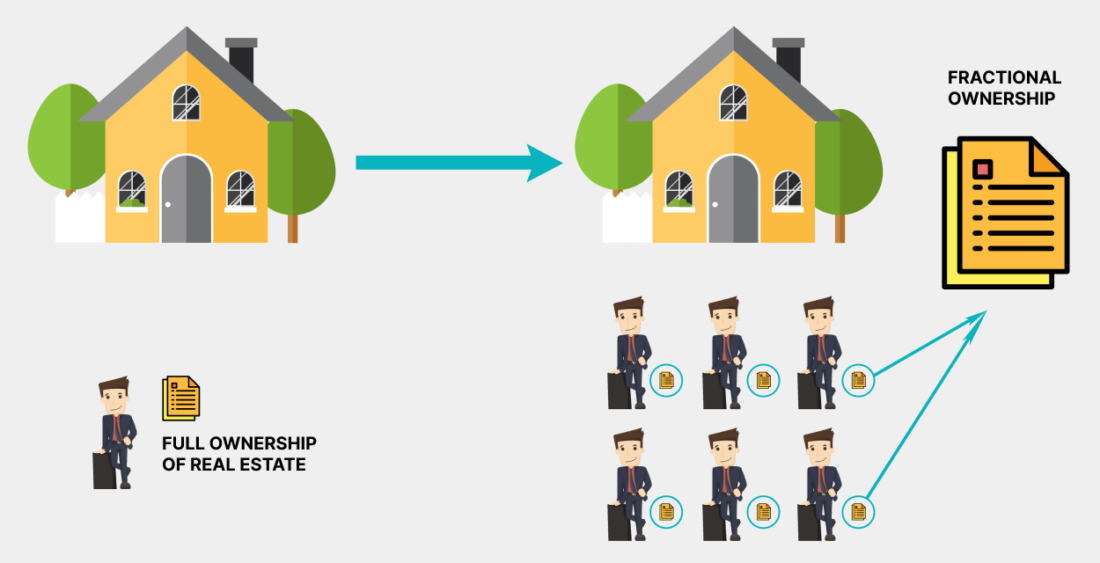
Fractional ownership real estate investment allows multiple investors to purchase shares of a property, rather than requiring a single investor to buy the entire asset. Each investor owns a percentage of the property and receives proportional benefits including rental income, property appreciation, and sometimes usage rights.
Unlike timeshares, which only provide usage rights for a specific period, fractional ownership gives investors actual equity in the property. This investment model has democratized access to real estate, enabling individuals to invest in properties that would otherwise be financially out of reach.

How Fractional Ownership Real Estate Investment Works
The process of fractional real estate investing typically follows these steps:
- A company acquires a property (residential, commercial, or vacation)
- The property is divided into shares or fractions
- Investors purchase these shares, becoming partial owners
- A professional management company handles day-to-day operations
- Rental income is distributed to investors proportionally
- When the property is sold, investors receive their share of appreciation
Most fractional ownership platforms handle all aspects of property management, making this a truly passive investment. Investors don’t need to worry about finding tenants, maintenance issues, or other traditional landlord responsibilities.

Legal Structures for Fractional Ownership
Fractional real estate ownership can be structured in several ways, each with different legal and tax implications:
1. Tenancy in Common (TIC)
In a TIC arrangement, each investor owns a specific percentage of the property. Ownership interests can be unequal, and each investor can sell or transfer their share independently. This structure is common for commercial properties and vacation homes.
2. Limited Liability Company (LLC)
Many fractional ownership investments are structured as LLCs, where investors purchase membership interests. The LLC owns the property, providing liability protection for investors while offering tax benefits through pass-through taxation.
3. Real Estate Investment Trusts (REITs)
Some fractional ownership platforms operate as private REITs, allowing investors to purchase shares in a trust that owns multiple properties. This provides instant diversification across various real estate assets.
4. Delaware Statutory Trusts (DSTs)
DSTs are popular for 1031 exchanges and allow investors to own beneficial interests in properties. This structure is common for accredited investors looking to defer capital gains taxes.

Benefits of Fractional Ownership Real Estate Investment
Advantages
- Lower barrier to entry (investments starting at $100-$10,000)
- Portfolio diversification across multiple properties
- Professional property management
- Passive income through rental revenue
- Potential for property appreciation
- Access to premium real estate markets
- Reduced maintenance responsibilities
- Simplified tax management
Disadvantages
- Limited control over property decisions
- Potential illiquidity (longer investment horizons)
- Management and platform fees
- Shared decision-making with other investors
- Dependence on platform stability
- Potential for conflicts among co-owners
- Varying regulations across jurisdictions
- Exit strategies may be restricted

Types of Properties Available Through Fractional Ownership

Luxury Vacation Properties
High-end vacation homes in desirable locations like beach resorts, ski destinations, and international hotspots. Investors often receive both rental income and personal usage rights.

Single-Family Rentals
Residential properties in growing markets that generate steady rental income. These investments focus on cash flow and long-term appreciation rather than personal use.

Commercial Real Estate
Office buildings, retail spaces, and industrial properties that typically offer higher yields but require larger minimum investments. These attract more experienced investors.
The type of property you choose should align with your investment goals, risk tolerance, and desired level of involvement. Vacation properties might offer personal enjoyment alongside financial returns, while commercial properties typically focus exclusively on investment performance.
Ready to Explore Fractional Real Estate Investing?
Join thousands of investors who have already discovered the benefits of fractional ownership. Get access to our free comparison tool to find the platform that best matches your investment goals.
Compare Top PlatformsLeading Fractional Ownership Real Estate Investment Platforms
The fractional real estate market has grown significantly, with numerous platforms offering different property types, minimum investments, and fee structures. Here are some of the most established options:
| Platform | Minimum Investment | Property Types | Accredited Investors Only | Average Annual Returns | Fee Structure |
| Arrived | $100 | Single-family rentals, Vacation homes | No | 5-7% | 3.5% sourcing fee, 0.15% AUM fee |
| Fundrise | $10 | Residential, Commercial (via REITs) | No | 8-12% | 1% annual fee |
| CrowdStreet | $25,000 | Commercial, Multi-family | Yes | 10-20% | 1-2% AUM fee |
| RealT | $50 | Residential rentals | No | 7-11% | 2.5% transaction fee |
| Ember | $5,000 | Vacation properties | No | 5-15% | Property-specific fees |

How to Get Started with Fractional Real Estate Investing
-
Define your investment goals
Determine whether you’re seeking income, appreciation, or a combination. Consider your investment timeline and risk tolerance.
-
Research available platforms
Compare minimum investments, property types, historical returns, and fee structures across different fractional ownership platforms.
-
Verify accreditation requirements
Some platforms are only available to accredited investors (individuals with $1M+ net worth or $200K+ annual income).
-
Start with a small investment
Many platforms allow you to begin with as little as $10-100, enabling you to test the waters before committing larger amounts.
-
Diversify across properties
Spread your investment across multiple properties or platforms to reduce risk and exposure to any single market.
-
Monitor performance
Track your investments’ performance through platform dashboards, focusing on both income distributions and property valuations.

Comparison: Fractional Ownership vs. Other Real Estate Investment Models
| Investment Feature | Fractional Ownership | Traditional Direct Ownership | REITs | Real Estate Crowdfunding |
| Minimum Investment | $10-25,000 | $20,000-200,000+ (down payment) | $1-1,000 (public REITs) | $500-10,000 |
| Liquidity | Medium (some secondary markets) | Low (months to sell) | High for public REITs, Low for private | Low to Medium |
| Management Responsibility | None (professional management) | High (unless using property manager) | None | None |
| Capital Appreciation Potential | Direct exposure to specific properties | Direct exposure to specific property | Indirect (portfolio-based) | Direct exposure to specific projects |
| Income Generation | Proportional rental income | Full rental income | Dividend distributions | Interest or equity distributions |
| Control Over Asset | Limited (shared decisions) | Complete control | None | None |
| Tax Benefits | Some pass-through benefits | Full tax advantages (depreciation, etc.) | Limited (dividends taxed as income) | Varies by structure |
| Diversification Ease | High (multiple properties possible) | Low (high capital requirements) | Very High (built-in diversification) | Medium to High |
Tax Considerations for Fractional Real Estate Investors
Fractional real estate ownership comes with specific tax implications that investors should understand:
- Rental Income: Income from your fractional share is typically taxed as ordinary income, reported on Schedule E.
- Depreciation: You may be able to claim a proportional share of depreciation deductions, reducing your taxable income.
- Capital Gains: When the property is sold, you’ll likely pay capital gains tax on your portion of the appreciation.
- 1031 Exchanges: Some fractional investments qualify for 1031 exchanges, allowing you to defer capital gains taxes.
- Pass-Through Taxation: Many fractional investments use LLC structures that pass profits and losses directly to investors.
- Platform-Specific Considerations: Tax treatment can vary based on the legal structure of the platform (REIT, DST, LLC, etc.).
Always consult with a tax professional familiar with real estate investments to understand your specific tax obligations and opportunities for tax-advantaged investing.
Frequently Asked Questions About Fractional Ownership Real Estate Investment
Is fractional real estate ownership the same as a timeshare?
No. Timeshares only provide usage rights for a specific time period each year, while fractional ownership gives you actual equity in the property. With fractional ownership, you benefit from both rental income and property appreciation, not just usage rights.
How liquid are fractional real estate investments?
Liquidity varies by platform. Some offer secondary marketplaces where you can sell your shares, while others have minimum holding periods. Generally, fractional investments are more liquid than direct property ownership but less liquid than publicly traded REITs.
What happens if other fractional owners want to sell but I don’t?
This depends on the platform’s structure. Most have clear policies about property disposition. Some require majority or supermajority approval for sale, while others have predetermined hold periods. Review the operating agreement carefully before investing.
Can I use my IRA or 401(k) to invest in fractional real estate?
Yes, many platforms allow investments through self-directed IRAs or 401(k)s. This can provide tax advantages, but requires setting up the appropriate account structure with a custodian that allows alternative investments.

Start Your Fractional Real Estate Investment Journey Today
Join our upcoming webinar to learn how to build a diversified real estate portfolio with as little as $100. Our experts will walk you through platform selection, tax optimization, and long-term investment strategies.
Register for Free WebinarConclusion: Is Fractional Ownership Real Estate Investment Right for You?
Fractional ownership has transformed real estate investing by making it accessible to a broader range of investors. With lower entry costs, professional management, and the potential for both income and appreciation, it offers compelling advantages over traditional property ownership for many investors.
However, it’s not without drawbacks. The limited control, potential illiquidity, and shared decision-making may not suit everyone’s investment style. As with any investment, it’s important to do thorough research, understand the fee structure, and align the investment with your financial goals.
Whether you’re looking to diversify an existing portfolio, generate passive income, or take your first steps into real estate investing, fractional ownership provides a flexible pathway to property investment that’s worth considering as part of your overall financial strategy.